
CASH IN AN INSTANT—Rockland NY!
⚡️ Why wait weeks for a buyer when you can get paid RIGHT NOW? Whether you’re moving out of New City, downsizing in Nyack, or just clearing clutter in Pearl River, we are your local, fast-track furniture solution! 🚀
We are hunting for high-quality pieces across all of Rockland! We pay TOP DOLLAR for your favorite brands—from West Elm, Pottery Barn, and Restoration Hardware to Ethan Allen, Arhaus, and Crate & Barrel! 🛋️✨ If it’s stylish and in great shape, we want it FAST!
Skip the endless back-and-forth of online marketplaces; we move at the speed of light to get that premium gear out of your house and money into your pocket. 💸
The 3-Step Rockland Lightning Process:
📸 SNAP & SEND: Send your photos and description—no time wasted!
💥 INSTANT OFFER: We’ll hit you back with a fair, competitive price immediately!
🚚 DONE & DUSTED: Once we agree, we schedule the fastest pickup in the county and pay you on the spot!
✅ OUR NO-HASSLE GUARANTEE:
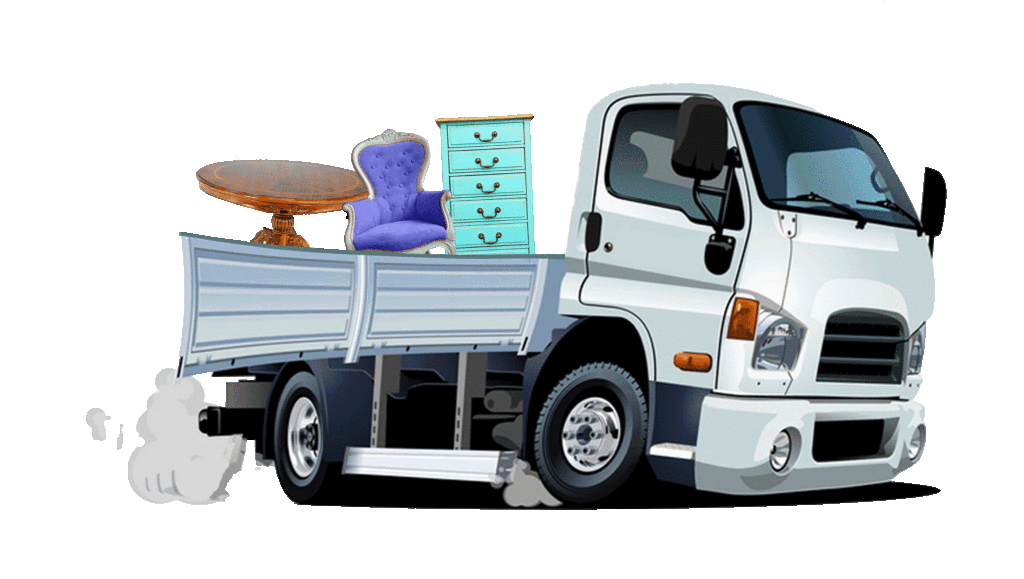
We handle EVERYTHING! We bring the truck, we do the heavy lifting, and the pickup is 100% FREE. No hidden fees, no lifting a finger—just fast cash for your designer gear! 🏠💨
ROCKLAND RESIDENTS: GET AN OFFER IN MINUTES! 👇
[ 📞 CALL OR TEXT US NOW: [845-274-6953 ]
[ 📩 SEND PHOTOS VIA gottaz06@aol.com ]
Category of furniture
- Seating: Designed for sitting or reclining. This includes chairs, sofas, sectionals, stools, and ottomans.
- Surfaces (Tables): Flat, stable spots for eating, working, or placing items. Examples include dining tables, coffee tables, desks, and consoles.
- Storage: Pieces built to organize, hide, or hold belongings. Common examples are cabinets, bookcases, dressers, wardrobes, and chests.
- Sleeping: Furniture specifically for rest, such as beds, bunk beds, daybeds, and mattresses. Study.com +4
- Living Room: Focused on comfort and socializing (e.g., sofas, accent chairs, entertainment centers).
- Bedroom: Centered around sleep and personal storage (e.g., beds, nightstands, armoires).
- Dining Room: Designed for eating and hosting (e.g., dining sets, buffets, china cabinets).
- Office: Prioritizes productivity and ergonomics (e.g., computer desks, office chairs, filing cabinets).
- Outdoor: Built for durability in open spaces (e.g., patio sets, garden benches, hammocks).
- Traditional: Characterized by ornate carvings, rich dark woods, and formal, classic designs (e.g., Queen Anne or Victorian styles).
- Modern: Developed in the early 20th century, focusing on minimalism, clean lines, and materials like steel and glass.
- Contemporary: Reflects current, ever-evolving trends of “the now,” often blending different styles and innovative materials.
- Mid-Century Modern: Popularized from the 1930s to the 1960s, featuring organic shapes, tapered legs, and functional simplicity.
- Rustic/Farmhouse: Emphasizes natural materials, weathered finishes, and a cozy, lived-in feel.
- Multifunctional: Pieces that serve more than one purpose, like a sofa bed or storage ottoman.
- Accent/Occasional: Small pieces used primarily for decoration or extra utility, like side tables or consoles.
- Antique vs. Vintage: Antique furniture is typically at least 100 years old, while vintage is generally 20 to 100 years old.